DATAGOV Blog
Here you can find works in progress, exploratory notes, and thoughts on current affairs in data infrastructures.
Who Does the App Say You Are? Tracing the Impacts of Brazil’s New Digital ID Infrastructure
After gathering a long list of documents and multiple appointments, Joana has finally managed to have her legal gender changed to match her gender identity. Her city district’s civil registry office has confirmed this change via a nice little package of official-looking papers. The matter should be settled. Yet, when Joana checks the app that stores her digital ID, her legal gender has not been changed. She returns to her local civil registry office, but the officials are unable to help her. Federal authorities—nameless and located in some faraway place—are in charge of the digital ID and its resulting errors.
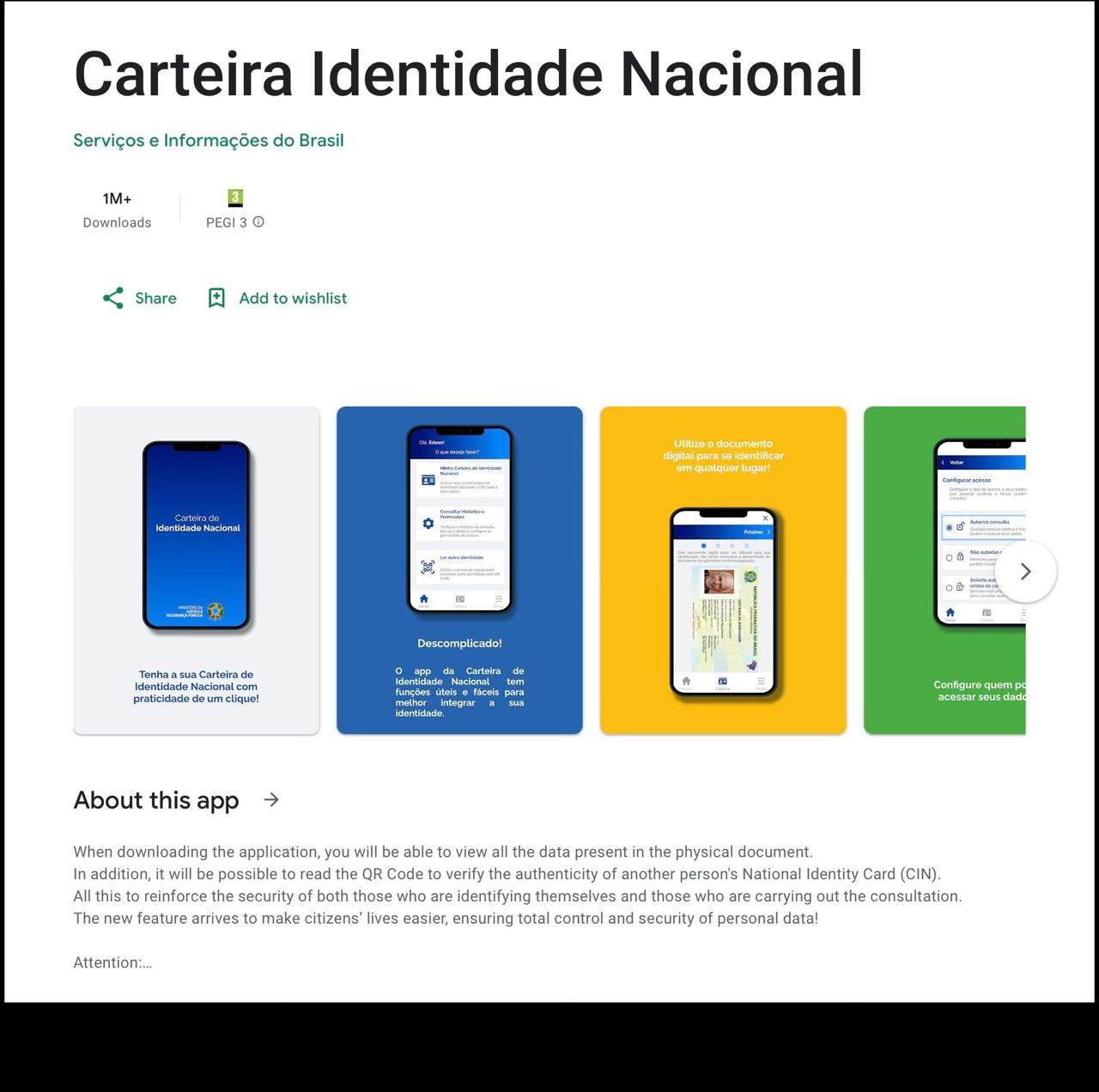
Since mid-2022, the Brazilian government has been introducing a digital ID infrastructure, the CIN (carteira de identidade nacional: ‘national ID card’). The CIN creates significant changes in how Brazilians are identified by the state. Said changes promise to fix longstanding ID issues in Brazil, such as protecting Brazilians from financial scams that preexisting IDs were unable to address.
However, the CIN introduces many outcomes that are negative, harmful, and obstructive, ranging from making day-to-day procedures like doctor’s appointments more difficult to obstructing citizens’ attempts at demanding attention and accountability from the state. How does Brazil’s new ID infrastructure produce novel challenges, obstacles, and difficulties for its citizens and residents?
Two interrelated forms of change can help us answer our guiding question. First, Brazil is a federal system in which states and municipalities have great authority over identification. E.g., each state issues an ID number to its residents, so a person who has moved between states probably has more than one ID number. The CIN, however, is a centralized infrastructure: ID data is defined, stored, and controlled by federal authorities—and, potentially, private actors involved in setting up and managing the infrastructure. Put simply, ID procedures—from changing one’s ID data to acquiring an ID card—that were accessible via local institutions and officials are becoming more remote and difficult to reach in the hands of fewer and higher-up actors. This change compromises a person’s right to accurate identification, as well as to alter their ID information.
In Joana’s case, a visit to her local civil registry office, where she got to know the employees and had a specific worker assigned to her case, is no longer a viable solution. Her attempts at raising and following up on complaints via the CIN’s confusing digital portal have garnered no results. If the app does not comply, her right to a legal gender change remains on paper only.
Second, the CIN infrastructure digitizes an experience that was previously reliant on physical and analog resources and knowledge. Before the CIN, identification was a matter of carrying around and preserving a physical card, as well as visiting physical offices and having in-person interactions with state and municipal authorities to fix issues and add information. Now, access to and fluency in digital environments like apps and websites are crucial to having an ID card and handling one’s ID information. Thus, a digital ID card makes things very difficult for people who do not have the knowledge and resources to navigate these digital infrastructures.
Joana can no longer rely on the close proximity of her district’s civil registry office, the relationships she established with civil registry employees, or the accumulated know-how of local trans groups. She cannot afford to travel to her state's capital to try to speak to a federal officer directly, either. Therefore, she stays in an ID limbo, not being able to reach her identification goals in a digital landscape she does not know how to navigate.
Joana and other Brazilians like her are not alone in their struggles with digital IDs. These impacts may be more obvious in Brazil due to the contrast between old and new ID infrastructures. However, cases like Joana’s can be felt in different countries and regions due to the rising prevalence of digital IDs, from India to the European Union. These new infrastructures promise endless benefits, but their shortcomings should capture our attention, as well.
Due to the widespread and everyday need for identification that any person faces, changes in an ID infrastructure affect how groups and individuals expect from, interact with, and make demands on the state. If the shift towards a digital and more unapproachable ID infrastructure results in a myriad of new challenges and difficulties for Brazil’s residents, many of the outcomes of this infrastructural change are negative or harmful for groups that are already struggling to get what they want and need out of ID infrastructures.